| Dear readers,
Innovations are a key driver of economic development and societal progress. Yet it does not emerge in a vacuum, it starts where opportunities, knowledge, entrepreneurial dynamism and a propitious environment come together.
The latest issue of ZEW Monthly, focusing on “Where Innovations Emerge”, shows how educational mobility and regional start-up ecosystems can strengthen innovative capacity, why young companies in Germany have recently been bringing fewer innovations to market despite rising numbers of start-ups, and to what extend criteria-based tenders facilitate young innovative firms to gain market access.
We hope you enjoy reading this issue.
We are taking a short summer break from our newsletter, but we will be back in September with the next issue of ZEW Monthly.
|
|
|
|
| |
 | | | RESEARCH ON THE EMERGENCE OF INNOVATIONS |
| |
| |
|
| | | |
↗ EDUCATIONAL MOBILITY PROMOTES INNOVATION
|
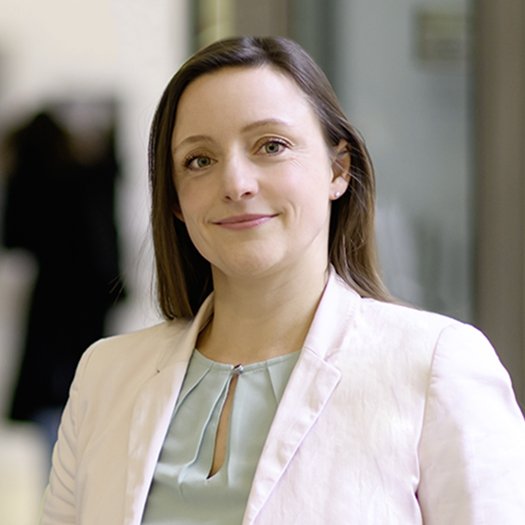
| Better opportunities for social mobility are a key driver of innovation and economic development. A new study by ZEW and the University of Zurich, published in the scientific journal Nature, shows that higher educational mobility is linked to an average eleven per cent rise in patent applications. "A better allocation of human capital is crucial for innovation," explains ZEW researcher Sarah McNamara.
|
| More about the study
|
| |
| |
|
|
|
| | | | |
↗ START-UPS IN EUROPE: SIGNIFICANT POTENTIAL REMAINS UNTAPPED
|
| Why does Europe still leave so much start-up potential untapped? A ZEW policy brief based on more than nine million firm foundations shows that France significantly increased its scale-up potential, while Germany lost momentum despite a strong starting position. "Our findings show that Europe has considerable start-up potential," says Hanna Hottenrott of ZEW, adding that better conditions are needed to help promising start-ups grow into scale-ups.
|
| More about the study
|
| |
| |
|
|
|
| | | | |
↗ PUBLIC PROCUREMENT AS A GATEWAY TO INNOVATION
|
| Why do innovative startups often struggle with public tenders? A new ZEW study reveals: price-based awards rarely reward innovation, whereas criteria-based procedures do. "Innovative solutions in procurement procedures must be visible and verifiable in the award criteria. To specifically target innovative young companies, the proportion of criteria-based tenders should be increased," says co-author Lena Füner.
|
| More about the study
|
| |
| |
|
|
|
|
|---|
| |
 |
|
| | |
| | FEWER INNOVATIONS DESPITE RISING START-UP NUMBERS
|
| The number of business start-ups in Germany rose slightly in 2024. With around 157,000 new firms, their number increased by three per cent compared to the year before. This marks the first sign of a turnaround since 2021, albeit at a still low level. At the same time, data from the latest IAB/ZEW Start-up Panel show that industrial and innovative sectors in particular continue to lose momentum: While the service sector is growing, the number of start-ups and innovation activity in research-intensive industries are both declining significantly.
|
|
| |
|
| |
|
|
| | | | | |
↗ LONGER TEMPORARY CONTRACTS UNLIKELY TO CREATE NEW JOBS
|
| Under the coalition's reform plans, the maximum duration for temporary contracts without cause would double to 48 months. ZEW economist Eduard Brüll is skeptical, pointing to his own research on an opposite reform from 2001. "Extending the time cap on temporary contracts is unlikely to create many jobs; rather, it will make it more difficult to move into permanent employment," is his assessment.
|
| More about the comment
|
| |
| |
|
|
|
| | | | |
↗ INCOME TAX: TARGETED RELIEF FOR MIDDLE CLASS
|
| Reducing income tax for low and middle incomes is a key policy goal of the German federal government. According to a brief ZEW study, a relief volume of just 10 billion euros would be enough to provide noticeable relief for middle incomes – up to 520 euros a year for a taxable income of 40,000 euros. "The key trick is a targeted jump in the marginal tax curve," explains ZEW researcher Holger Stichnoth.
|
| More about the study
|
| |
| |
|
|
|
|
|---|
| |
|
|
|
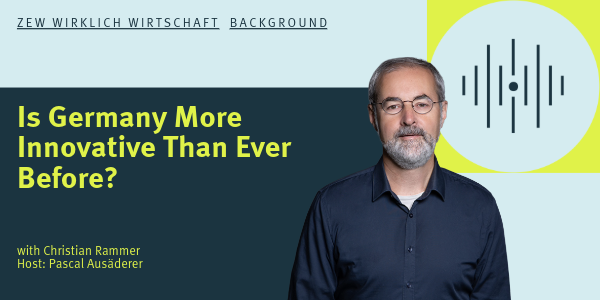
| In 2024, Germany invested more money in innovation than ever before: According to the latest innovation survey by ZEW Mannheim, companies spent around €213.3 billion on innovation. Nevertheless, the German economy is losing momentum in international competition.
In the ZEW podcast, Christian Rammer, deputy head of the Research Unit “Economics of Innovation and Industrial Dynamics”, explains why record budgets alone are not enough to strengthen innovation in the long term and where the main obstacles to innovation in Germany lie.
|
| Listen in now (in German)
|
| ZEW “WIRKLICH WIRTSCHAFT” – NOW AVAILABLE ON ALL PODCAST PLATFORMS
|
|
|
|
| |
|
|
|
| | |
The European Commission has presented its proposals for reforming the existing European Emissions Trading System. This marks the starting point of the actual political negotiations about the future of Europe’s most important climate action instrument.
In their joint opinion piece, ZEW President Achim Wambach and Sebastian Rausch, head of the ZEW Research Unit "Environmental and Climate Economics", explore how a reliable climate policy can be designed beyond 2030 without overburdening companies.
|
| Read the full opinion piece
|
|
| |
|
| |
|
|
|
|
|
|
| | |
|
| |
| REVIEW
|
| ↗ FIRST-HAND INFORMATION ON ECONOMIC POLICY
Pressure for Reform in Germany: How Can the Right Balance Be Achieved for the Future?
Germany is under considerable pressure to reform. On 8 July 2026, Yasmin Fahimi, Chair of the German Trade Union Confederation (DGB), and ZEW President Professor Achim Wambach discussed how economic renewal can be achieved without jeopardising social cohesion. The discussion was hosted by ZEW Mannheim as part of its “First-Hand Information on Economic Policy” event series. The speakers focused on strategies to reconcile competitiveness, good work and an effective welfare state.
|
| ↗ #ZEWLIVE
Pensions Between Economic Realities and Legal Constraints
On 2 July 2026, ZEW hosted the #ZEWlive webinar “The Future of Pensions: Economic Realities and Legal Constraints” with Tabea Bucher-Koenen, head of the ZEW Research Unit “Pensions and Sustainable Financial Markets” and professor at the University of Mannheim, and Constanze Janda, President of the German University of Administrative Sciences Speyer and Professor for Social Security Law and Administrative Science. The speakers discussed the reform proposals put forward by the Pensions Commission, of which they were members and which was co-chaired by Janda along with Frank-Jürgen Weise. The discussion centred on the issues of ensuring a pension system that is financially viable despite demographic change and that guarantees against poverty in retirement.
|
|
|
| |
|
| |
|
| | ↗ ZEW LUNCH DEBATE
Scientific Exchange on the Energy Transition and Climate Change
The ZEW Lunch Debate, which was held on 16 June at the Representation of the State of Baden-Württemberg to the European Union in Brussels, focused on the question of how Europe can generate more high-growth companies and hold its own in global competition. The event was entitled “Supporting Firm Growth in Europe: Evidence and Policy Options for the EU Start-up and Scale-up Agenda”. ZEW economist Hanna Hottenrott chaired the panel, which discussed barriers to growth, differences between European ecosystems and specific economic policy options.
|
|
| |
|
| |
|
| | ↗ ICT CONFERENCE
Scientific Exchange on the Energy Transition and Climate Change
On 25 and 26 June 2026, ZEW’s “Digital Economy” Research Unit hosted the 24th Conference on the Economics of Information and Communication Technologies in Mannheim. For many years, the conference has been regarded as one of the leading academic events in this field. Around 90 researchers from Germany and abroad discussed the latest developments in the digital economy.
|
|
| |
|
| |
| | | | → CONTACT FOR QUESTIONS OR SUGGESTIONS ON THE CONTENT | |
| |
| |
| |
| | | | | ZEW – Leibniz Centre for European Economic Research
L7, 1 · 68161 Mannheim
Phone: +49 (0)621/1235-01
E-mail: zewmonthly@zew.de
Website: www.zew.de
|
| |
|
|
|
|
| | | | | Executive Directors:
Professor Dr. h. c. Achim Wambach, PhD
Claudia von Schuttenbach
Chair of the ZEW Supervisory Board:
Ministerial Director Dr. Hans Reiter
Registered Office: Mannheim
Local Court Mannheim HRB 6554
USt-IdNr.: DE188318292
Commitment to Data Protection
Detailed Legal Note
|
| |
| |
|
|
|
|
|---|
|
|